Electrocardiogram in athletes: know your heart rate
Author: Jesús Miranda
Entry: December
Area: Sports Medicine
What is the electrocardiogram?
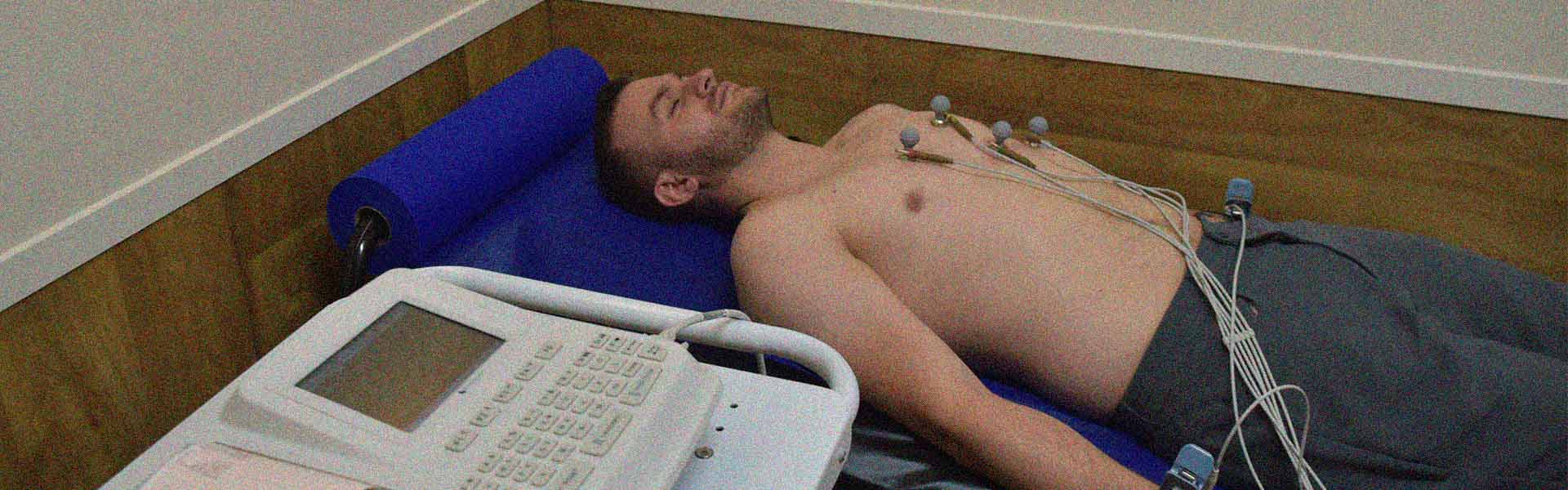
The electrocardiogram or ECG records the electrical activity of the heart at each beat. This test detects both problems in the heart rhythm and in the electrical discharges of the heart. It also helps to indirectly evaluate any changes in the heart's structure that could affect its function.
The most striking thing is that it is a non-invasive test, which only requires placing some electrodes on the skin of the person. These electrodes are usually placed on the thorax as well as on the upper and lower limbs. In addition to being painless, it does not transmit electric current, since it is limited to capturing cardiac activity in its natural state.
The ECG, although simple, is of great value for understanding the health of the heart in people with cardiac symptoms as well as in athletes.
Why perform an ECG in an athlete?
Sudden death is a matter of concern for athletes. In sports, heart diseases called arrhythmogenic right ventricular dysplasia (ARVD) and hypertrophic cardiomyopathy are causes of death.
In ARVD, normal cardiac muscle tissue in the right heart chamber is gradually replaced by fibrous and fatty tissue. This increases the risk of fatal arrhythmias.
In hypertrophic cardiomyopathy, the muscle of the left heart chamber thickens abnormally, making it difficult to pump blood.
Both conditions can be detected or suspected by a resting ECG. The ECG not only helps to find heart problems. It is one of the most important sports tests for prevention and heart health care.
Performing an ECG, beyond evaluating a health problem, provides peace of mind to both the athlete and his team in the practice of the sport.
Are there differences between an ECG in an athlete and in the general population?
Yes, there are notable differences due to the changes that exercise produces in the heart of athletes. Some findings that might be perceived as abnormal in the general population may be normal and frequent in athletes. This implies that the analysis and reading protocol must be adjusted to obtain an accurate and relevant result in the sports setting.
First of all, it is essential that the athlete is completely at rest and rested before the test. This state ensures a more accurate analysis of cardiac activity under resting conditions.
Second, it is preferable that the health professional in charge of the reading and analysis be a physician specializing in sports medicine or cardiology. In addition, he or she should understand the patient's profile, including his or her level of physical activity and the reason for the test. This allows him to apply special criteria for athletes, which differ from those used for sedentary people.
How to deal with ECG results?
If the results are normal or common, no further testing is needed. In this case, it is recommended to repeat the ECG within a maximum of two years to maintain routine monitoring of cardiac health.
When the results are borderline, it is essential to follow the instructions of the sports medicine physician. He or she will design an individual follow-up plan to ensure proper management of any findings.
When the results are abnormal or unusual, further tests, such as an echocardiogram, and reviews by a cardiology physician may be required. These steps are essential to better understand the situation and will allow special measures to be implemented as required by each patient.
At Biuman we have a special protocol to perform electrocardiograms for both amateur and elite athletes.
Our team of experts will perform the EKG carefully and accurately to evaluate your heart health and get the results you need. We will be here to answer your questions and guide you if you need further testing or consultation with other physicians.
Our priority is to give you peace of mind and confidence in your results, and to ensure accurate monitoring of your heart health. Don't hesitate to contact us to schedule your electrocardiogram and take the first step towards a healthier heart and take care of your life while you exercise.
Your life and safety are our priority!
Sources:
Carek, S. M., Edenfield, K. M., & Carek, P. J. (2020). Preparticipation Evaluation. Primary Care: Clinics in Office Practice, 47(1), 1-17. https://doi.org/10.1016/j.pop.2019.10.001. https://doi.org/10.1016/j.pop.2019.10.001
Drezner JA, Sharma S, Baggish A, et al. (2017). International criteria for electrocardiographic interpretation in athletes: Consensus statement. British Journal of Sports Medicine, 51(9), 704. https://doi.org/10.1136/bjsports-2016-097331.